I haven’t blogged in months. I’ve had numerous experiences this summer that I wanted and planned to write about, but life — teaching, traveling, taking long drives through green countryside, and less glamorous activities like laundry and carpet cleaning and insomnia — intervened.
Tonight, though, I’m thinking about how this, for me, has been a summer of experiencing the best parts of being a woman: finding unexpected moments of sisterhood and unity; exploring unfamiliar traditions and ways of being female; building supportive friendships with beautiful, strong women who encourage and want the best for each other. This is on my mind because I spent the evening with one of those friends, watching Mad Max: Fury Road, which (as she’d promised) turned out to be pretty awesome and inspiring. Afterward, wiping away tears, we had a great conversation about being women, the strong female and male characters in the film, and the unexpectedly sweet love story.
All of which led me to decide that it was time to break my blogging silence and write about this one day in June.
 Oyotunji African Village has been on my bucket list since I lived in Savannah. When I checked the upcoming events on their website early this summer and read about the Yemoja Festival (“We celebrate and venerate the primordial feminine energy”), I decided to book my visit for that weekend.
After spending the night in a fleabag motel (okay, there were no bedbugs, but the AC was so loud I could barely sleep, the TV remote control and volume button didn’t work, some random guy rattled my doorknob, and the smell of mildew permeated the room), I drove to Oyotunji in the morning. I did not get breakfast first, mostly because the Denny’s where I planned to eat was mobbed with a post-church crowd and I thought I could buy food at Oyotunji. This matters in a little while.
When you arrive in the parking lot after driving down a rutted little road, you see a sign announcing that you are leaving the United States and entering the sovereign Yoruba kingdom. The village has its own king, who was appointed by the Yoruba king in Benin. His father, the village founder, studied Santeria in Cuba, and residents practice African vodoun (in a much more authentic form than I realized, it turned out; I had been expecting something more akin to New Orleans’ tourist-friendly French Quarter voodoo). Their veneration of orishas and ancestors governs every aspect of their lives.
 Note: I requested and received permission from my guide, one of the Oyotunji residents, to take photographs. I do not have photos from the Yemoja ceremony itself, during part of which we were asked to refrain from taking pictures and video.
I was ushered to the Yemoja temple, where preparations for the ceremony were underway. The women involved all wore white, including head coverings, except one, who had on a dress with blue and white swirls. Yemoja’s colors are blue and white; she’s the orisha of the ocean.
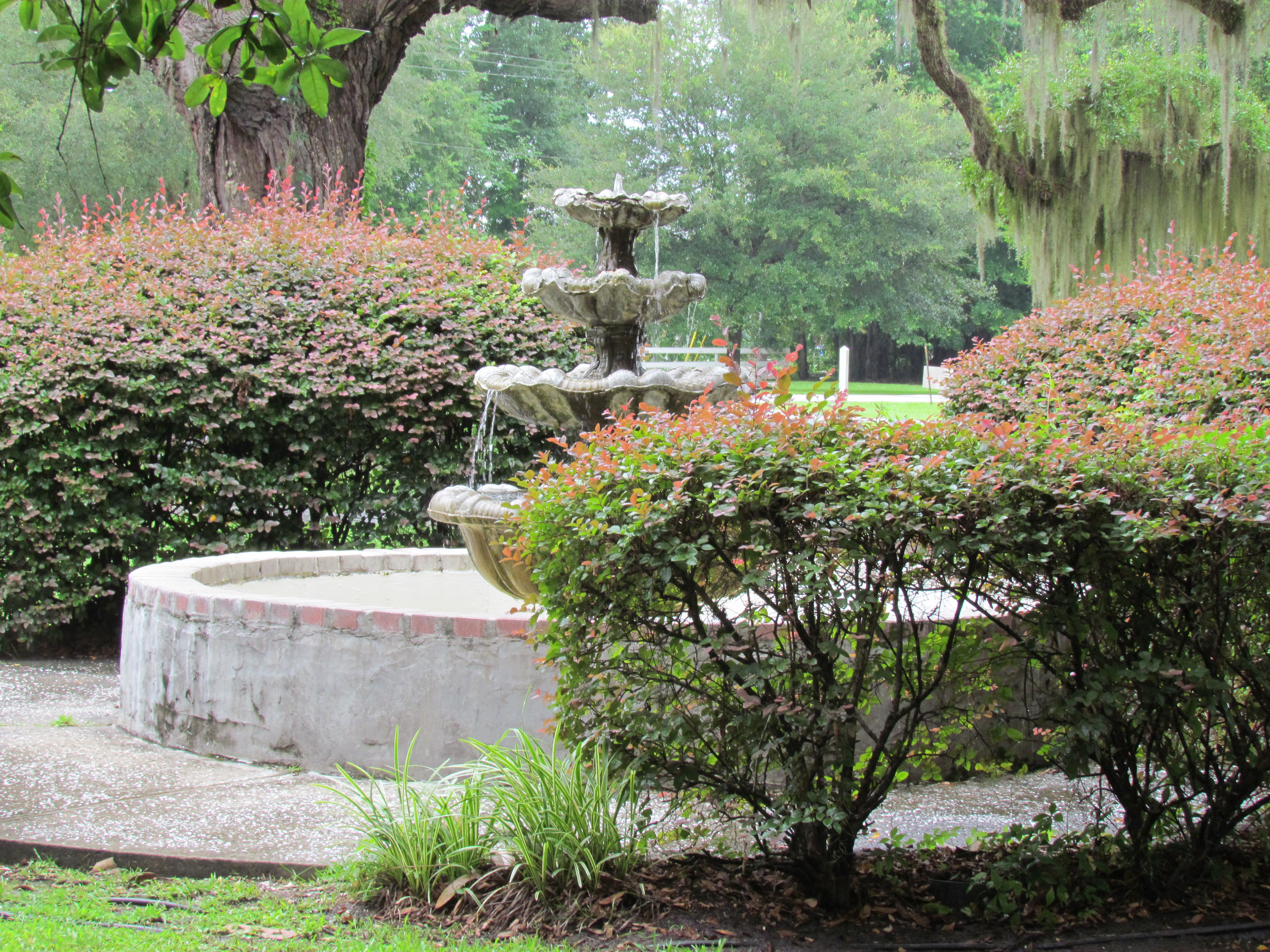
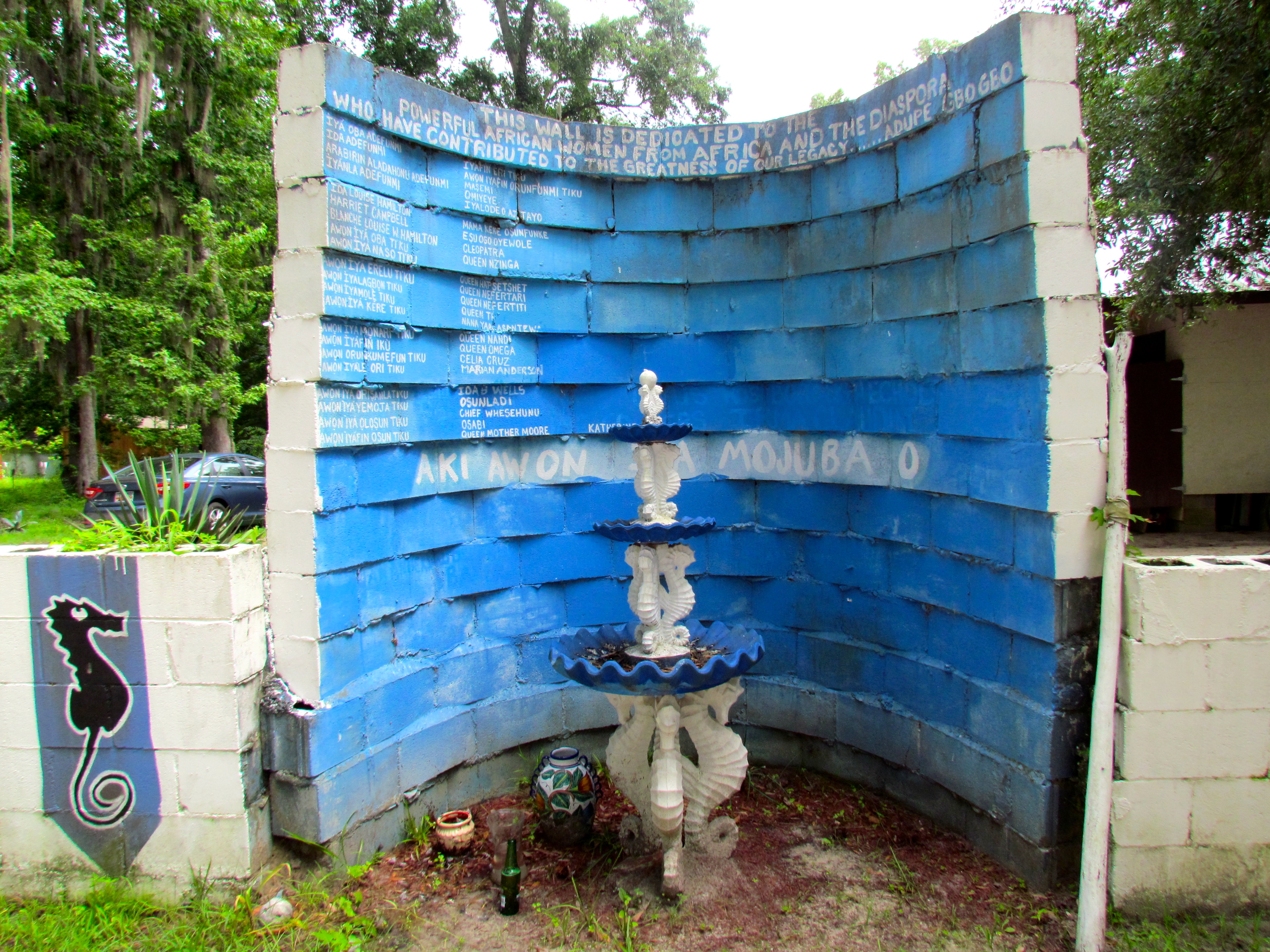 This shrine in the wall enclosing the Yemoja temple grounds honors the female ancestors. The fountain has a seahorse design.
The king also wore white. When villagers approached him, they would kneel to do obeisance, but what surprised me was the familiar, affectionate way he laughed and joked with them as they were prostrating themselves before him. I learned during my tour later that while he makes major decisions for the community (no air conditioning in homes; transitioning to a wholly sustainable, off-the-grid model by 2017), he doesn’t sit in a cool throne room all day. He’s out there digging irrigation ditches in the fields with everyone else. He nixed AC because he doesn’t want villagers living in “air-conditioned coffins”; he says the point of community is to be out with other people, not isolated in your comfortable house. It’s a philosophy and a way of life I admire but would loathe in practice.
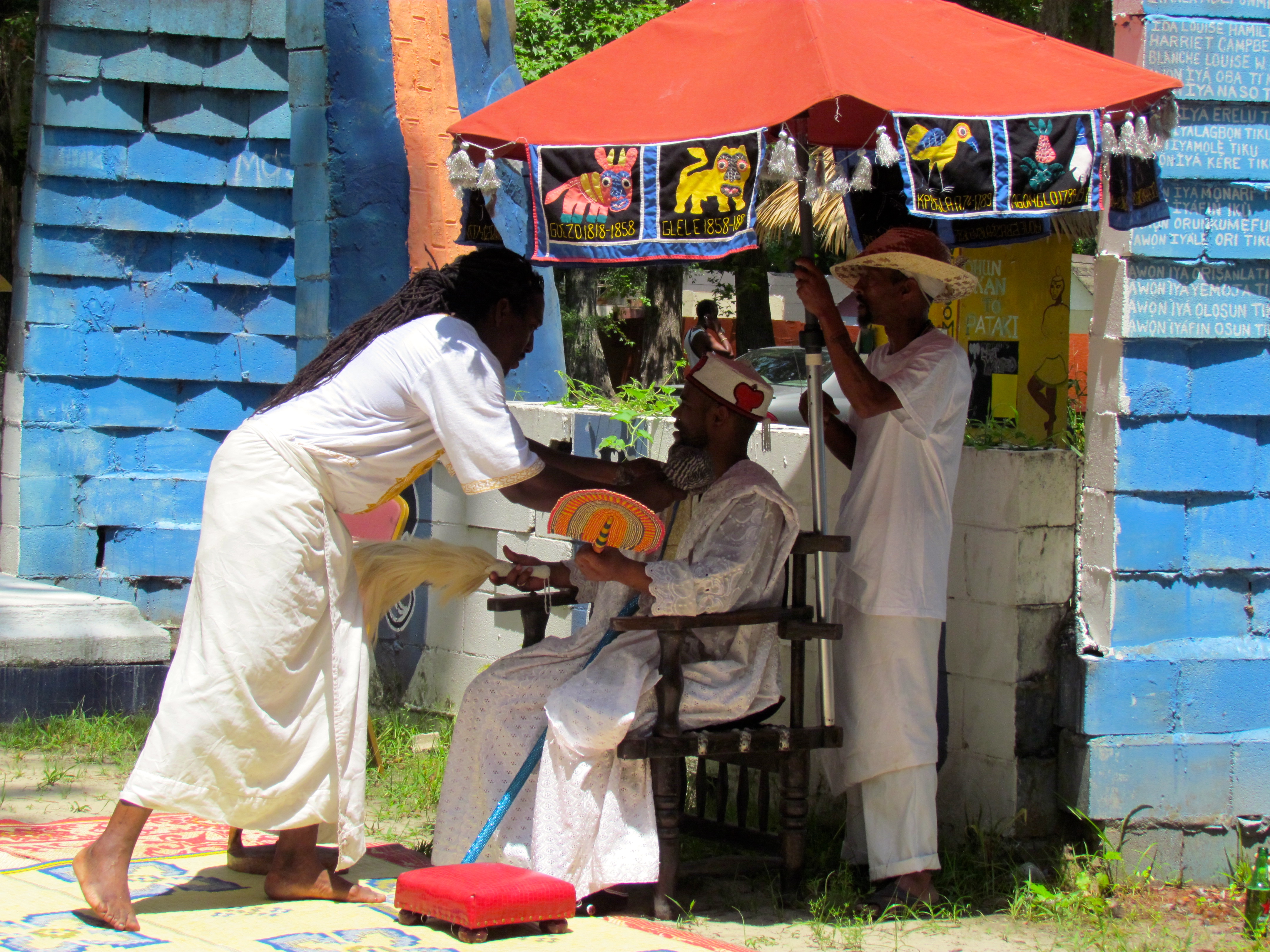
The king had an umbrella bearer, a fan, and a footstool.
The level of authenticity in the ceremony surprised me in two aspects. First, there was sacrifice of a dozen or so birds — chickens, a duck, roosters, others I couldn’t identify — and a goat. I forced myself to watch, and I was surprised not to be upset. After all, the animals didn’t appear to suffer; the duck was swimming in a nearby pond until just before its demise, and the goat had a pretty delicious-looking last meal, and their deaths came quickly. Still, it was a bit surreal and wholly outside my experience; I kept thinking, “I’m sitting here watching someone sacrifice a goat. How do I even begin to process that?” (Maybe I’ll write another post about how it affected my view of death.)
The second aspect that surprised me was that partway through the ceremony, all the female celebrants took off their head coverings and bared their breasts. This was the point at which we were all asked to put away cameras, I suspect for the participants’ privacy. The women, who ranged from probably mid-teens to eighties, danced and chanted without any self-consciousness. I looked at some of the older women, whose breasts sagged below their waists, and thought about the years of life experience etched on their bodies: lovers taken, pregnancies, babies born and nourished, hard physical labor, scars, graceful age. Every one of them was beautiful. They exhibited a freedom, joy, and comfort in their own bodies that is unlike anything I’ve ever before observed, certainly unlike anything I’ve experienced.
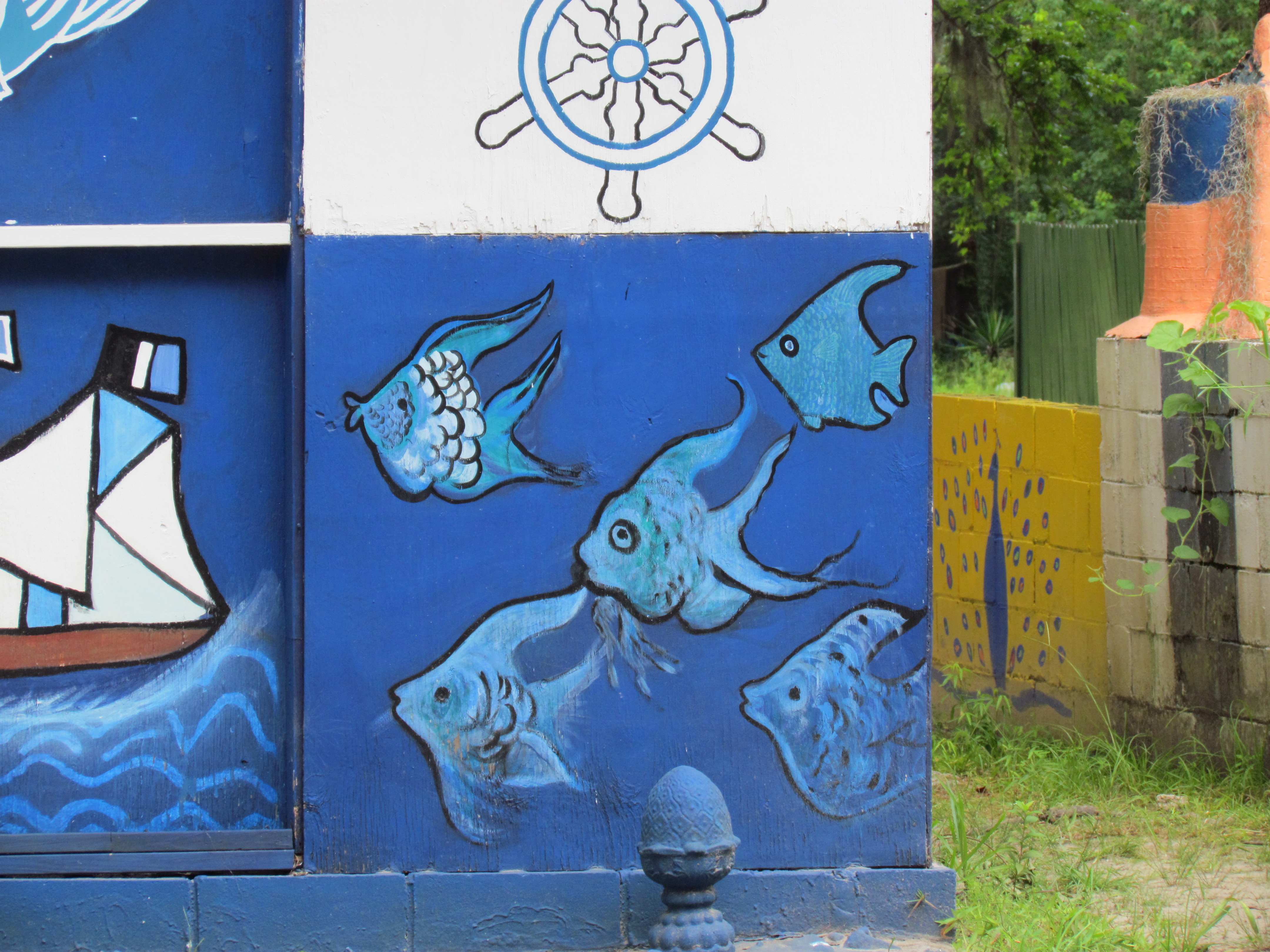 During my tour after the ceremony, I learned that all the women in Oyotunji belong to a secret society. When a girl begins to menstruate, she joins this society, which meets in Yemoja’s temple. The women of the community tell her “everything she needs to know” about becoming a woman and guide her through her adolescence, which I think is a beautiful concept. She isn’t left on her own to make her way as best she can though the quagmire of high school. Instead, she is surrounded and supported by every other woman in her village. Ultimately, she must perform a series of tasks designed to help her be a fully contributing (and, ironically, self-sufficient) member of the community: everything from sewing traditional African outfits and identifying local herbs to changing oil in a car, chopping down a tree, and excelling on the firing range. When she accomplishes all this, she is initiated as a woman and declared ready for marriage, which is entirely voluntary and, according to my guide, free of gendered power dynamics. A woman can take multiple husbands, and a man multiple wives; every adult has his or her own house, so no one lives together, and sex and love are low on the list of reasons for marriage.
 My guide told me there would be a feast later, but no one had begun cooking yet. By this time it was around 3 p.m., I still hadn’t eaten, and I was ravenous. So, somewhat reluctantly but also feeling like an interloper in a world that barely touched the edges of mine, I left.
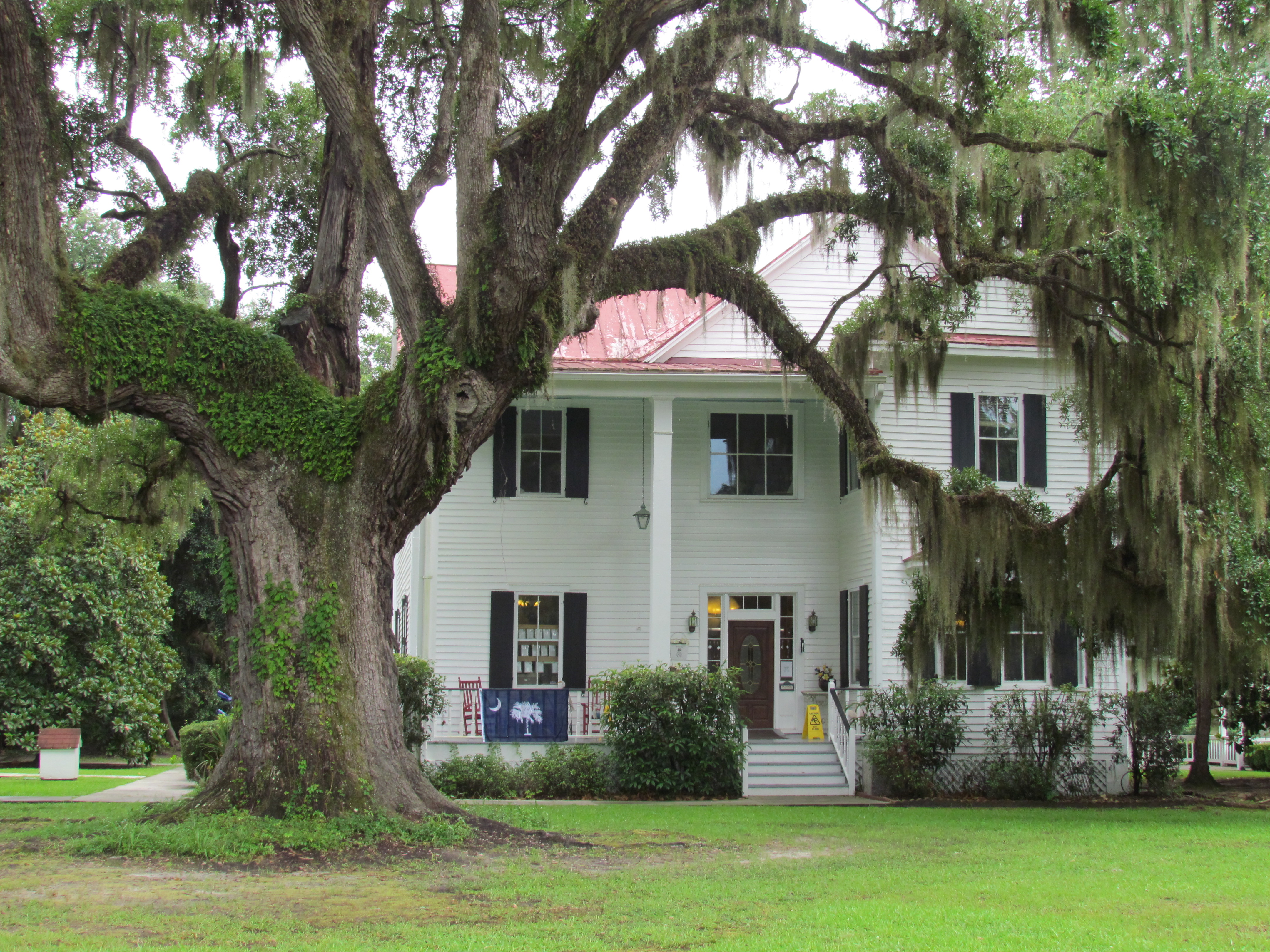
Next to the Point South Subway where I ate lunch was Frampton Plantation, a free visitor center. Since I was still trying to wrap my head around Oyotunji and had no pressing need to return to Statesboro, I decided to stop and ramble around the grounds. Inside is a museum, which means that a few exhibits of historic items are scattered throughout the multi-room gift shop. As I was browsing, a woman came in and began talking to the two women at the counter.
 “I just got out of church, and I was driving by here, and the Lord told me to stop,” she explained. “I’ve driven past dozens of times and never been in, but today the Lord said I needed to come in here and talk to you.” I missed part of the conversation, but I think one of the women at the counter must have mentioned that she was single and looking for a man, because I heard the visitor say, “What you need to do is, you tell God you’re ready for a man, and you think of a phrase. Don’t say it out loud, because the devil will hear it and give it to the wrong man to trick you. But you just put that phrase in your head and God will know. Then, when you meet the right man, he will say that phrase, and that’s how you know God sent him to you.”
 I wondered whether that kind of folk practice actually works. Maybe if you sincerely believe it? If so, I envy the people for whom it works. Religious formulas have never held true for me. My belief lacks certainty.
The woman continued. She talked about how many beautiful, strong, smart women diminish themselves in order to be with a man, and how damaging this is to everyone — women and men alike. I was standing at the top of the stairs, studying paintings by local artists, and she looked up at me. “Are you hearing this? God wants you to hear this, too,” she said to me. “Don’t settle for a man who is less than you are. And never become less than you are for a man.” (This is a powerful contrast to the dating advice my grandmother once gave me: “You must never let a man know how smart you are.”)
As I left, I asked this woman — this total stranger, who had dispensed both odd folklore and profound insight — if she would hug me. She did, and then she held my shoulders and looked into my eyes and said, “I pronounce a blessing on you. I will pray with you and for you.” It was the most personal, intimate benediction I have ever received. And I don’t even know her name.
 Monique Bos
Leave a comment